Bestseller20% off
Natural Hair Clay · New Improved Formula
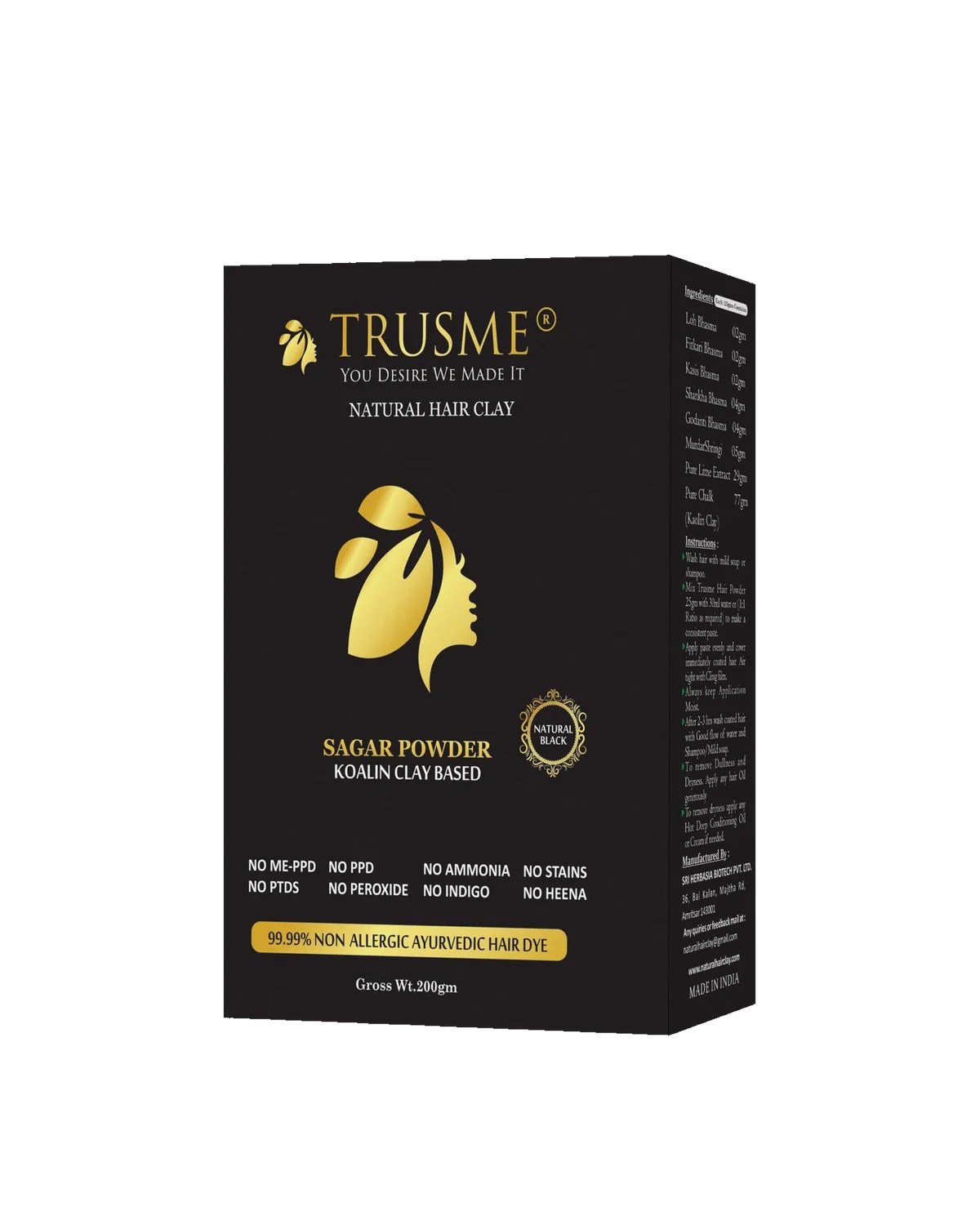
Trusme Sagar Powder 200 g
Our clay-based hair colour powder for grey hair, in the new improved formula.
₹399₹499
Formulated without PPD, ammonia or hydrogen peroxide · Questions? Chat with us on WhatsApp
Trusme Sagar Powder
A kaolin clay based hair colour powder with lime extract and traditional Ayurvedic bhasmas, for a natural black shade. Formulated without PPD, ammonia or hydrogen peroxide.
Bestsellers
Natural Hair Clay · New Improved Formula
Our clay-based hair colour powder for grey hair, in the new improved formula.
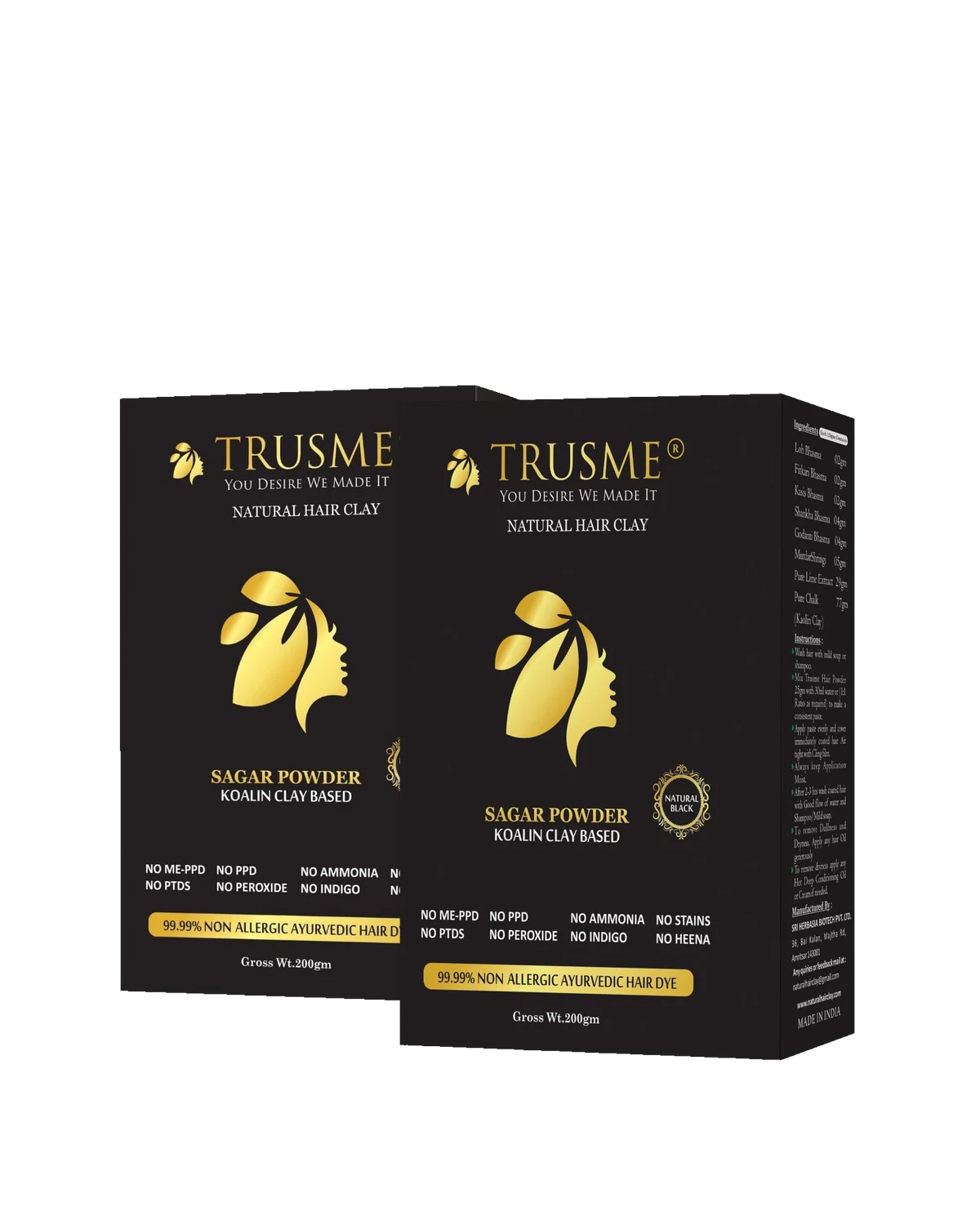
2 × 200 g · Improved Formula
Two 200 g packs of Sagar Powder, for regular users or two people.
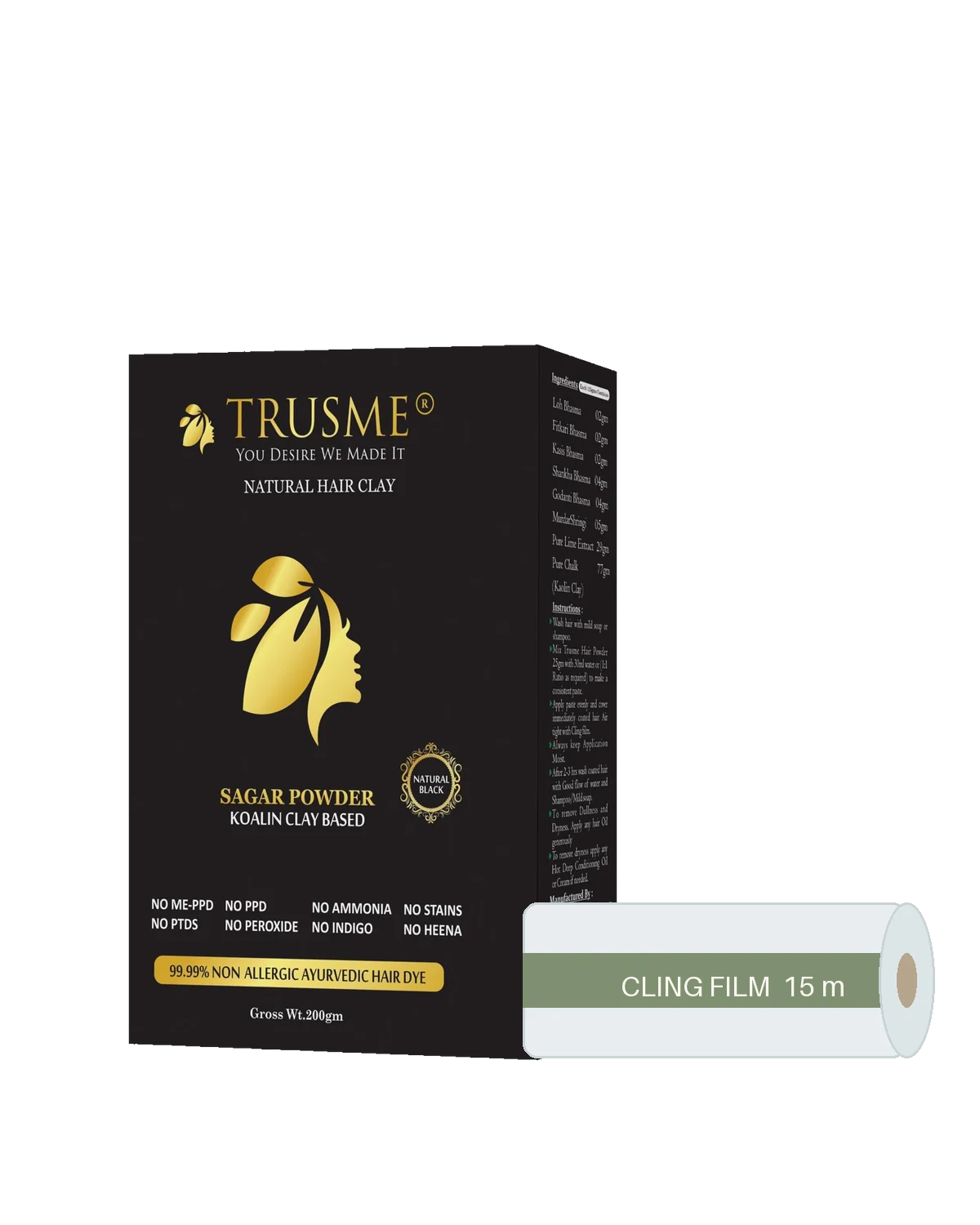
200 g box + 15 m cling film
Everything for your first application: one 200 g box with 15 m of cling film.
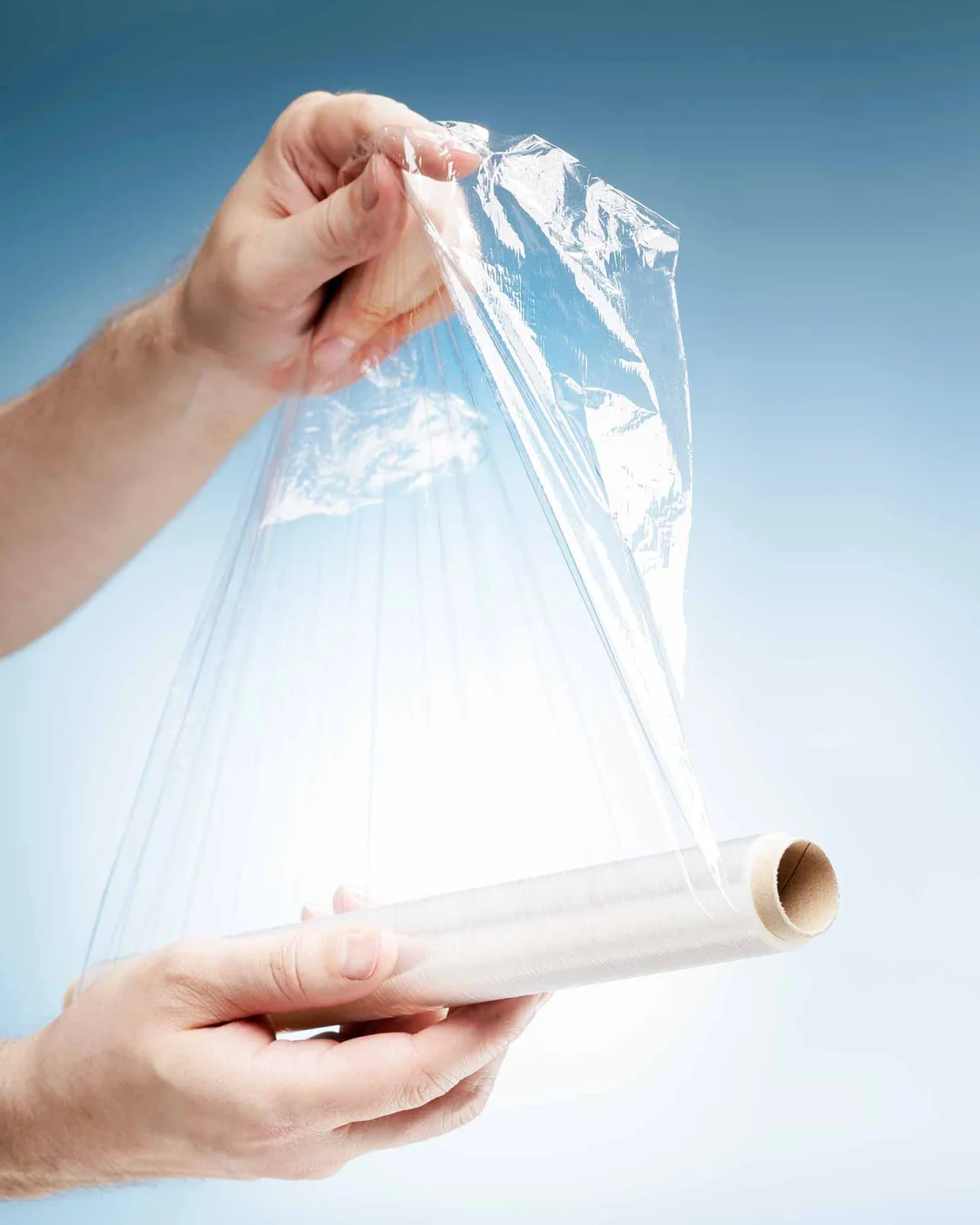
Application add-on
Keeps the paste airtight and moist while it works. Specially recommended for good results.
Shop by category
What we leave out
Many chemical dyes rely on PPD, ammonia and peroxide. Sagar Powder is formulated without them, and without the henna or indigo that can leave orange or bluish tones.
Formulated without PPD, ME-PPD or PTDS — common ingredients in chemical hair dyes.
Made without ammonia or hydrogen peroxide.
So no orange or bluish tones — a natural soft black or dark brown shade.
Leaves no black or yellow stains on skin after application.
Made with naturally derived ingredients, which may rarely cause sensitivity. Always do a patch test before first use.
Ingredients
Sagar Powder is kaolin clay based, with lime extract and traditional Ayurvedic bhasmas — every ingredient is listed on the pack. Mixed with water and kept covered, the paste works on grey hair over two to three hours.
Our storyPure chalk · 77 g per 125 g
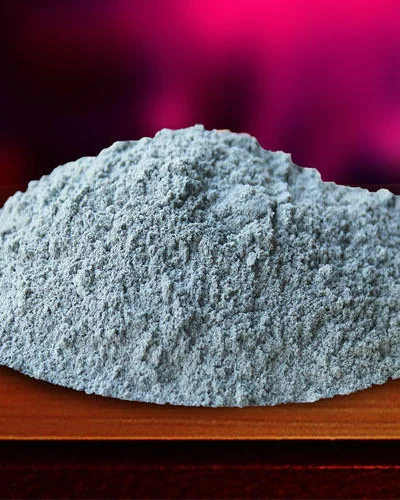
A soft, fine white clay that forms the base of the paste.
29 g per 125 g
Pure lime extract, the second main ingredient.
Shankha · Godanti · Kasis · Fitkari · Loh
Traditional calcined preparations used in Ayurveda.
5 g per 125 g
A traditional Ayurvedic mineral preparation.
The ritual
Wash hair with soap or shampoo so that no trace of grease or oil remains.
In a china or glass bowl, mix the powder with water into a thick, creamy paste — for example, 25 g of powder with 30 ml of water, as on the pack.
With your hands or a brush, apply the paste to towel-dried or water-sprayed hair so no strand is left uncoated. Layer the remaining paste on top.
Immediately cover the coated hair airtight with cling film or a thin plastic sheet. A piece of cloth on top helps it grip.
Keep the paste moist and covered. Leave it longer for darker results.
Wash out with a good flow of water and shampoo. Apply hair oil generously to avoid dryness, and use conditioner to reduce roughness.
Customer reviews
Reviews from customers published on our original website. Individual results vary.
Our story
Natural Hair Clay offers a hair colour for grey hair that leaves out PPD, ammonia and peroxide. Trusme Sagar Powder is an Ayurvedic hair clay powder — kaolin clay based, with lime extract and traditional bhasmas — applied as a paste and given time to work.
It asks for a little patience — two to three hours under cling film — and rewards it with a natural black shade.
Read moreFAQ
Can't find what you're looking for? Ask our assistant, or message us on WhatsApp.
Trusme Sagar Powder is a clay-based hair colour powder for grey hair. You mix it with water into a paste, apply it, and keep it covered for 2–3 hours. It gives a natural soft black or dark brown shade.
It is kaolin clay based. As printed on the pack, each 125 g contains Pure Chalk (Kaolin Clay) 77 g, Pure Lime Extract 29 g, Murdarshringi 5 g, Shankha Bhasma 4 g, Godanti Bhasma 4 g, Kasis Bhasma 2 g, Fitkari Bhasma 2 g and Loh Bhasma 2 g. It is formulated without PPD, ME-PPD, PTDS, ammonia, hydrogen peroxide, henna, black henna or indigo.
A natural soft black or dark brown. Some people see black after the first wash, others a dark blackish-brown. Results depend on your hair, skin and the weather. For a deeper shade, leave it on longer or repeat the application two days later.
The paste only works while it stays moist. Covering the coated hair airtight with cling film stops it drying out. Dry or air-exposed paste will not work.
The pack suggests 25 g of powder with 30 ml of water (roughly 1:1, adjusted as needed) to make a consistent paste. Use enough to coat every strand, with extra to layer on top. The original formula is specially recommended for short hair.
It is made with naturally derived ingredients, which may rarely cause sensitivity. Always do a patch test first, and stop using it if irritation occurs. If you're unsure, consult a doctor. It is not recommended after a hair transplant or any scalp surgery.
Message us on WhatsApp — 11:00 AM – 6:00 PM.